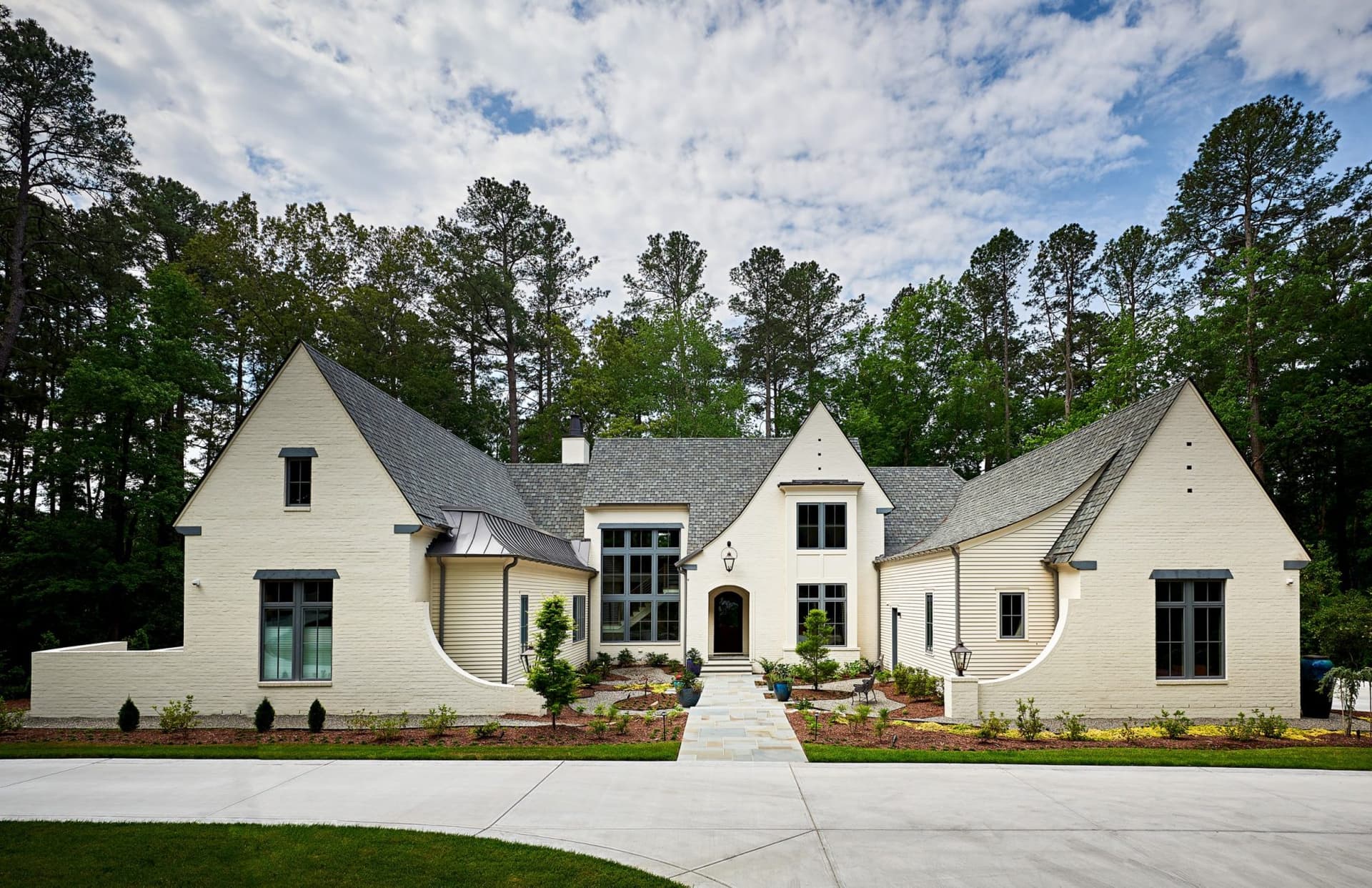
How To Design A Basement Home – As Seen in Home Design & Decor Mag
A walk-out basement provides a valuable recreation space in a home — a place to relax and entertain, the perfect spot for a theater, pool spa bath, or home gym. When evaluating a homesite, the chosen lot may have topography ideal for a basement. In such cases, it is most cost-effective to design as such, but it's important to properly plan comprehensively how the walk-out basement area will coordinate with outdoor living elements and the rest of the house.
In a walk-out basement house, the main living area is elevated from the backyard, so there can be a dysfunction between the spaces if it is not designed properly. When a homeowner envisions a basement billiard room and entertainment bar alongside a pool, pool deck, and outdoor kitchen, the typical result leaves the pool about twelve feet below the main living area, possibly creating an awkward transition between the heart of the home and outdoor amenities.
Reconfigure the Porch
Since a main level porch or balcony is effectively the 2nd floor on the back of a basement home, its shadow blocks sunlight to the basement area. Shifting the house design so the porch is off one side of the house allows a portion of the walk-out basement to be fully day-lit, which reduces the dark-cellar effect.
When topography slopes across the lot, retaining walls and internal staircases can create walk-out access from both main and basement levels across the home's rear. The trade-off involves burying a larger basement portion underground, but that may be worth it to achieve some yard space on the
Homeowners can maximize porch reconfiguration by installing retractable clear-vinyl phantom screens, which create flexible indoor entertainment space during cold months and roll up to extend outdoor living in warmer seasons.
Tiered Outdoor Living
An alternative approach involves creating multiple levels: descend nine steps from an outdoor kitchen to a raised patio, then nine more steps to the basement level. Several levels of tiered living spaces beat one giant set of steps. This design is more inviting for outdoor living, is easier for daily use, and draws visitors through the space; however, a raised patio is expensive to build unless it jives with the topography.
Although implementing a walk-out basement is straightforward, achieving optimal functionality and seamless indoor-outdoor integration requires careful planning from an architect or custom home builder.